Key takeaways
- Suspect an object when it meets all three conditions: it faces the bed or shower, sits between waist and eye height, and already has power.
- The most common hiding spots are smoke detectors, sockets and chargers, alarm clocks, TVs, air vents and decorative objects.
- You can tell a camera is there from three traces: an unfamiliar device on the network, a lens glint in the dark and an electromagnetic field around an object that should be inert.
Spy cameras are now as small as a button and can be embedded in almost anything. But two rules of physics don't change: a camera needs a viewing angle, and usually constant power. These 12 spots, compiled from real cases, show where to focus your checks.
Objects wired to power (most common)
- 1. Smoke detectors — especially those directly above the bed.
- 2. Wall outlets and power strips — the method used in Türkiye's rental flat case.
- 3. Light bulbs and bulb sockets — used in the infamous Sapanca bungalow case.
- 4. USB charging adapters — fakes with embedded cameras are widely sold.
- 5. Alarm clocks and clock radios — the classic, still most frequent method.
- 6. Air purifiers and humidifiers — large housings easily conceal hardware.
Objects in the line of sight
- 7. TV frames and set-top boxes — small holes can hide a lens.
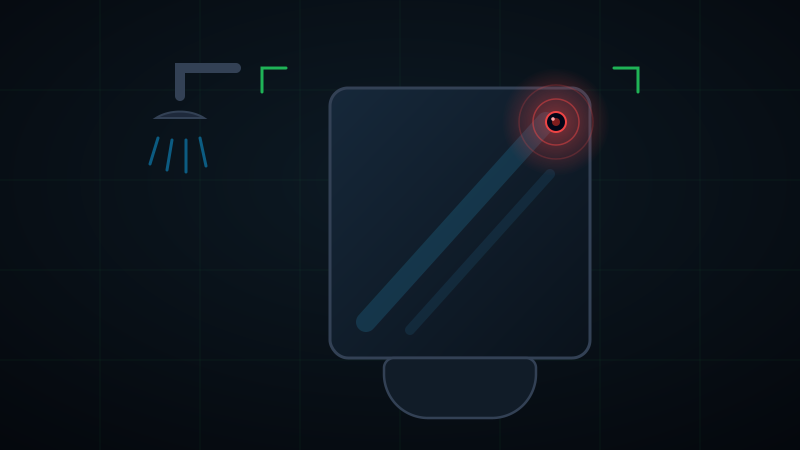
- 8. Mirror frames and two-way mirrors — check with the finger test.
- 9. Pictures and photo frames — pinholes in corners are suspect.
- 10. Books and decorative boxes — check the ones on shelves facing the bed.
- 11. Shower heads and bathroom fittings — a recurring spot in bathroom cases.
- 12. WiFi routers — ideal camouflage with power and network access built in.
You don't have to dismantle them all
Physically checking this whole list takes time. The practical approach is layered scanning: hunt for lens reflections with the lights off, then run WiFi and BLE scans to see devices on the network and nearby, and take EMF measurements on suspicious walls and objects. SenseRadar combines all these layers in one app; the radar screen points to suspicious signals so you only hand-check the flagged spots.
Frequently asked questions
Which objects should I check first in a room?
The ones that satisfy all three conditions at once: they face the bed or the shower, they sit between waist and eye height, and they already have power. In practice that is the smoke detector, the TV, the alarm clock, the charger left in the socket and any decorative object that has no reason to be where it is.
How do I tell a normal smoke detector from one with a camera?
A real detector is mounted in the middle of the ceiling and its openings are all the same; a converted one usually sits above or beside the bed, has one extra dark pinhole next to the LED, and often carries no brand or certification label. Fresh scratches around the screws and a housing that is warm to the touch are the other two giveaways.
Can a camera be hidden inside a mirror?
Yes, behind a two-way mirror, though it is far rarer than the internet suggests. Turn the room lights off and shine a torch at the glass: an ordinary mirror stays dark behind it, while a two-way mirror lets you see the cavity and any lens behind it.
How can I tell if there is a hidden camera in a room?
Look for three traces at once: an unfamiliar device on the network, a small hard glint from a lens under a bright light in the dark, and an electromagnetic field around an object that should be inert. When two of the three point at the same object, open it up and check.